Paths, landscape, and time
—all meeting right on our doorstep.
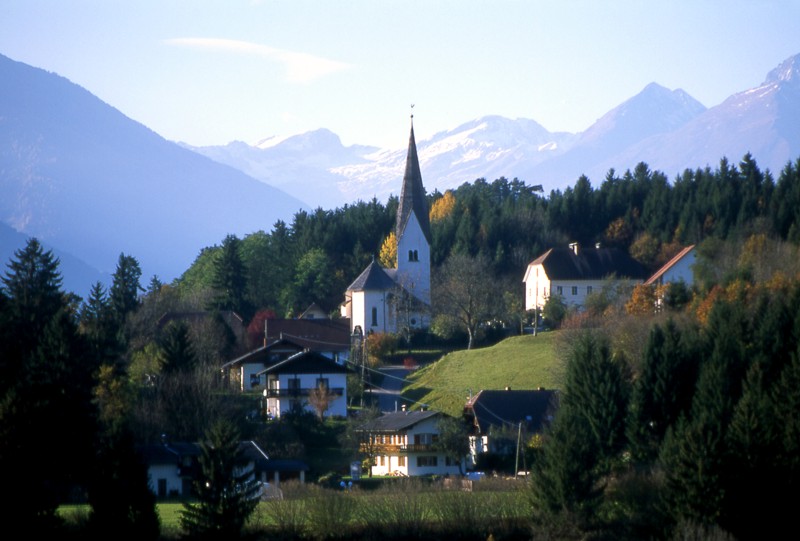
opening up at “Holzer Berg”
Just behind the Landhaus, Carinthia begins – shaped by centuries of routes and paths. The church of St. Peter in Holz stands on the remains of the Roman city of Teurnia—old walls, foundations, and paths that climb the slope, with views across the valley. The loop trail around “Holzer Berg” leads through fields, patches of woodland, and quiet stretches where landscape and history meet quietly. In May and June, the rare “Wunderblume” appears in Lendorf—a type of rhododendron that grows only here, colouring the slopes a delicate yellow for just a few weeks.
leading on to Spittal and up to the Goldeck
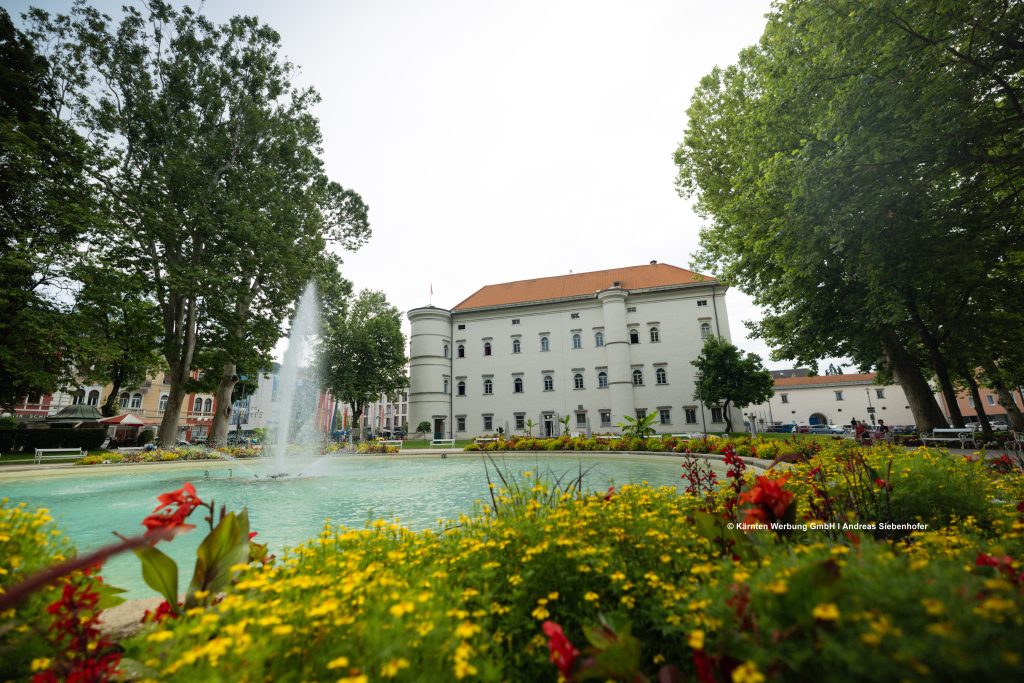
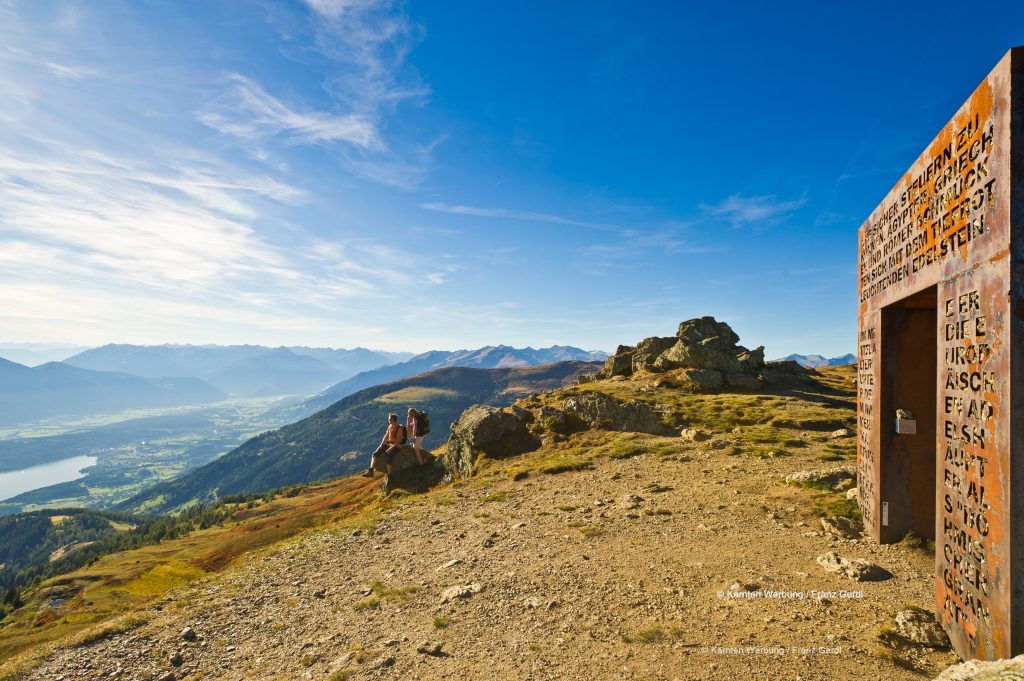
Spittal is just a few minutes away—quiet, compact, and with Schloss Porcia as its cultural centre. In the summer months, theatre and music bring the Renaissance courtyard to life. From Baldramsdorf, the cable car takes you up to the Goldeck. From the summit, the view opens wide across Lake Millstatt, towards the Hohe Tauern, and down into the Drau Valley. A place where the vastness of the landscape can be felt all at once.
offering space at Lake Millstatt and in the Nockberge
By the lake, there are quiet bays, long paths along the shore, and places suited to quiet hours. The loop trail is part of the Carinthian Lake Loop, which connects many of the region’s lakes and brings its waterside landscapes within easy reach. A day by the water, a section by bike, or a morning on the jetty invite you to pause and take your time. Behind it, the Nockberge rise in broad, gentle forms. The Nockberge Biosphere Park brings together stone pine forests, alpine pastures, and rounded summits. The “Granattor”—a gate built from garnet stones high above the lake—is one of those places where landscape and stillness meet.
following old routes through the valley
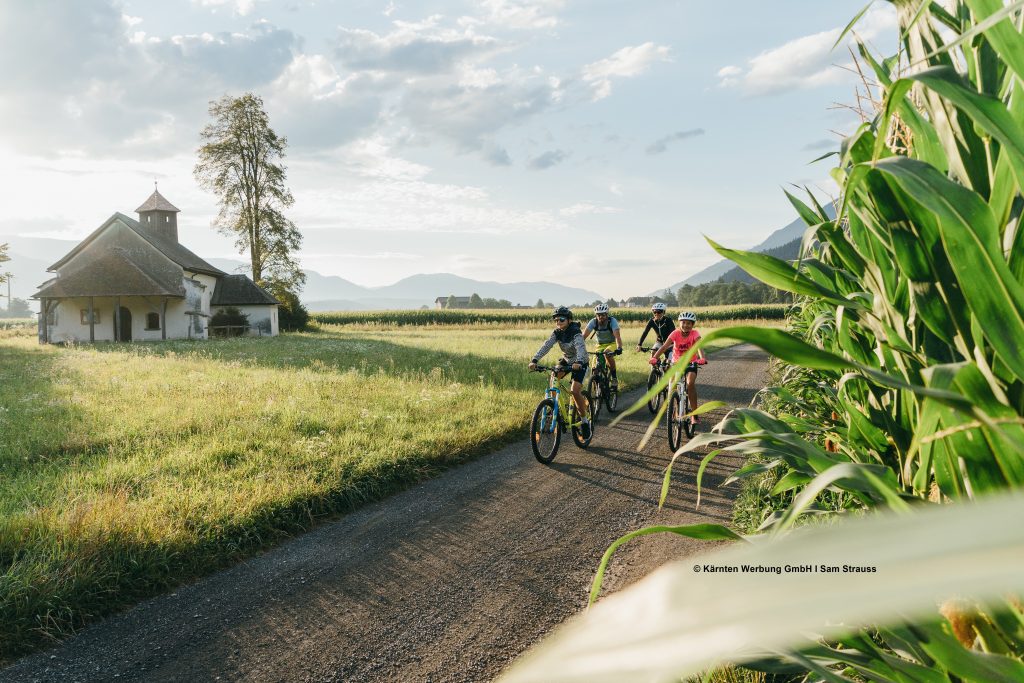
The Drau runs as a broad river through the valley below “Holzer Berg”. The Drau Cycle Path passes directly by the Landhaus and runs along the valley towards East Tyrol or further south. Part of the same route is shared with the Ciclovia Alpe Adria, which leads from Salzburg through the Mölltal, Spittal, and Villach to Tarvisio in Friuli. Here, the B100 is the lifeline of the Drau Valley—it connects places and landscapes, making day trips easy to plan, whether to Lienz, Villach, Tarvisio, or the lakes further south.
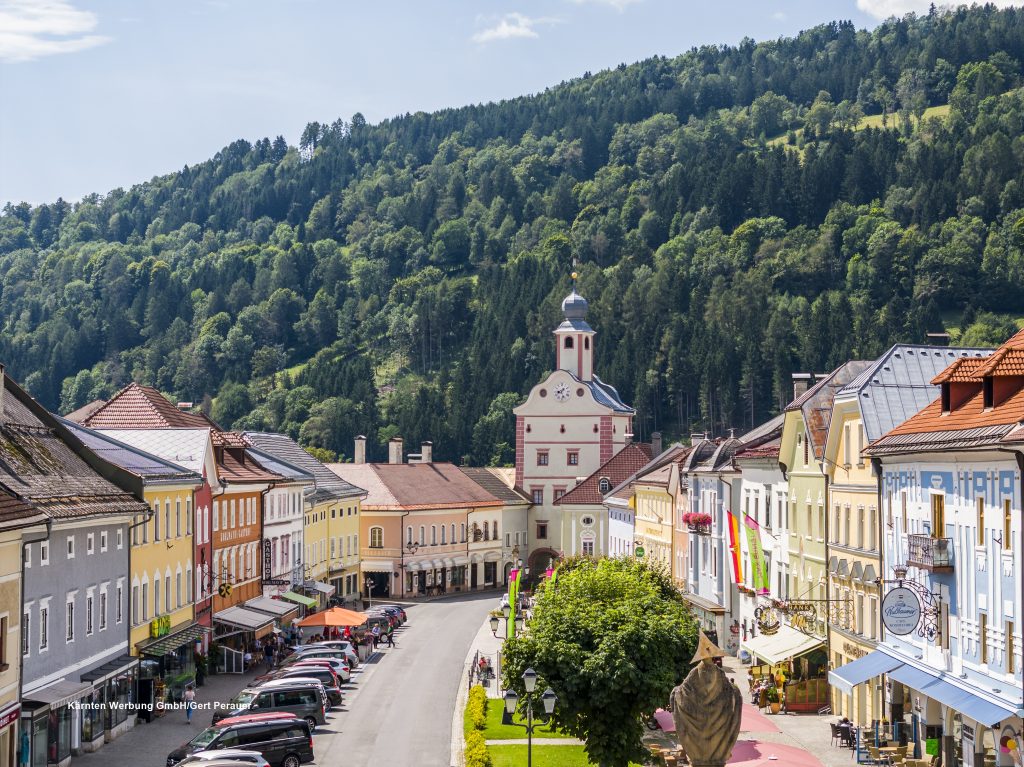
heading up to Gmünd and into the Maltatal
Gmünd’s medieval core is a place of narrow lanes, artists’ studios and quiet squares. The Kunsthalle draws international artists, the Porsche Museum tells the story of a region that never stopped inventing. Beyond the town, the Maltatal opens up – waterfalls, gorges and a long valley road that ends at the Kölnbreinsperre, high above everything else. Where engineering and wilderness have learned to coexist.
More about the region and what moves us – in our Landhaus Stories.